

Few haircuts divide a room like the mullet, and even fewer have made such a confident return. Today, Australian mullet haircuts sit at the centre of that comeback, pairing short, tidy sides with a longer, textured back. The result feels relaxed and a little rebellious, yet it can still look sharp enough for a weekday meeting.
In this guide, you will find 20 modern Australian mullet haircuts, from classic shapes to fade-heavy and wolf-inspired cuts. We also explain how to match a mullet to your face shape and hair type, which products give the best finish, and how often to visit the barber so the style never looks overgrown.
Why Is the Australian Mullet Haircuts So Popular?
The popularity of Australian mullet haircuts comes down to contrast and control. Modern barbers blend the sides into the back with precise fades, so the cut looks deliberate rather than dated. Music, sport and social media have also made longer, expressive hair feel fresh again, and the mullet gives people a way to stand out without a complicated routine.
It is also a style with a sense of humour, and people enjoy that. Yet behind the playful reputation sits a technical haircut that rewards a skilled barber. Over time, barbers have refined techniques such as point cutting, razor feathering and scissor-over-comb blending, which is why today’s results look smoother than the mullets of the past.
Key Benefits of an Australian Mullet
Here is what makes Australian mullet haircuts worth considering for almost any lifestyle:
- Flexible styling: change the fade, length and texture to suit casual outfits, formal events or creative workplaces.
- Suits many hair types: straight, wavy, curly and thick hair can all carry the shape when layered correctly.
- Quick morning routine: once the cut is set, a little paste or spray and a short blow-dry are usually enough.
- Face-shape balance: length at the crown and nape can add height, width or softness exactly where needed.
- Forgiving grow-out: the longer back stays neat between visits, so you can stretch appointments slightly.
- Easy to personalise: add a fringe, beard, moustache or colour to make the cut your own.
How to Choose the Right Australian Mullet
Choosing the right mullet is about proportion. Look at your face shape, your natural hair texture and your daily routine before you ask for a specific cut. With Australian mullet haircuts, a good barber will adjust the length, fade and layering so the haircut works with your features rather than against them.
Face Shape
Your face shape tells you where to add volume and where to keep the lines clean.
- Oval: nearly any mullet works, so try different fades and lengths.
- Round: choose a higher fade and more height on top to lengthen the face.
- Square: soft layers and a textured fringe soften a strong jawline.
- Heart: keep the top lighter and let the back add weight near the jaw.
- Oblong: avoid excess height and add width at the sides with a lower fade.
If you are unsure, bring two or three reference photos and ask your barber which shape looks closest to your own.
Hair Type
Texture decides how the layers sit and how the back grows.
- Straight hair: ask for point cutting or a razor finish to create movement.
- Wavy hair: perfect for shaggy and wolf styles, because the waves create texture on their own.
- Curly hair: keep the back longer to control shrinkage and let the curls form clear ringlets.
- Fine hair: choose a shorter, blunt back and a textured top for the look of fullness.
- Thick hair: ask for internal thinning so the mullet does not sit too bulky.
Hair density matters as much as texture, so mention how quickly your hair grows and how much styling time you have.
Read Related Post: Modern Shaggy Mullet Women
20 Australian Mullet Haircuts
The 20 Australian mullet haircuts below range from simple and classic to bold and experimental. Each one explains who it suits and what to ask your barber, so you can walk into the chair with a clear plan.
Classic Australian Mullet Haircuts

Classic Australian mullet haircuts follow the traditional shape: neat top and sides, with a back that falls past the collar. The line at the nape is straight or lightly layered, and the style needs very little product. It suits anyone who wants the original look without extreme length. Ask your barber for short sides, a tidy top and a soft, even back.
Modern Australian Mullet Haircuts
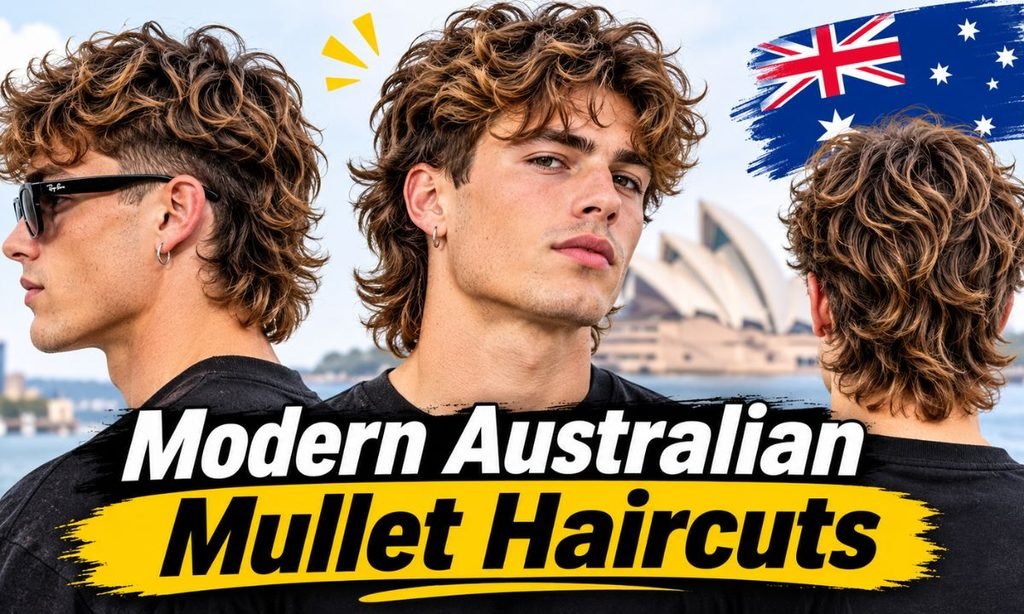
The modern mullet replaces harsh contrast with smooth blending. Short fades tidy the sides, light layers add movement on top, and the back flows naturally from the crown. It works in offices and on weekends, which makes it the most wearable option on this list. Ask for a seamless transition and a matte finish rather than a glossy one.
Taper Fade Australian Mullet

Among all Australian mullet haircuts, the taper fade is the most understated. It shortens the hair gradually around the ears and neckline, leaving a clean but subtle edge. With a mullet, it keeps the sides refined while the back stays long. It is a safe pick for first-timers and professional settings. Ask for a low-to-medium taper and mention that you plan to keep the back long.
Burst Fade Australian Mullet

A burst fade curves around the ear and drops toward the back of the head, leaving the nape area longer. It frames the mullet beautifully, particularly on curly or wavy hair, because the fade follows the natural shape of the skull. It looks bolder than a standard taper, so ask for a softer blend if you prefer something understated.
Low Fade Australian Mullet

A low fade starts just above the ear and follows the hairline around the neck. It leaves more hair on the sides, which suits thicker hair and softer face shapes. Paired with a mullet, it creates a gentle contrast that grows out cleanly. Ask for a scissor-blended finish to keep the look natural between visits.
High Fade Australian Mullet

A high fade starts near the temples and removes most of the length from the sides. This creates a sharp, high-contrast silhouette that makes the longer back stand out. It looks excellent with a textured crop on top, but it needs a refresh every three weeks. Choose it if you like a crisp, modern edge.
Textured Australian Mullet
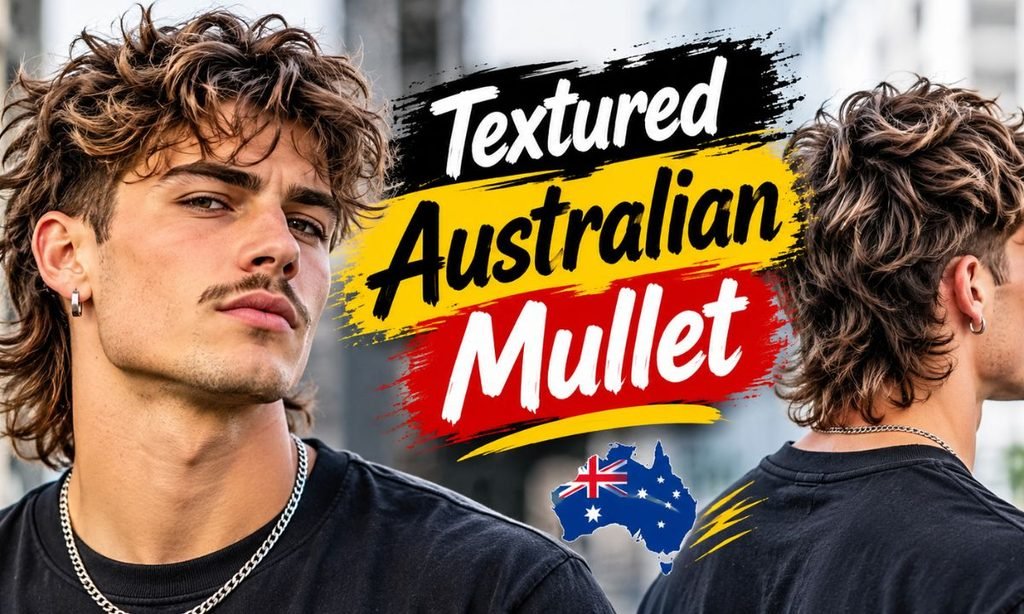
The textured mullet relies on choppy layers, point cutting and a matte finish for a lived-in feel. It looks full and slightly messy without seeming careless, which is ideal for fine or straight hair that needs body. Use a sea salt spray or light clay to bring out the texture, and ask your barber to cut the top with scissors rather than clippers.
Curly Australian Mullet

Curly hair and the mullet are a natural match, and curly Australian mullet haircuts hold their shape well. Keep the sides short and tapered to avoid extra width, and let the back grow into soft, defined curls. A curl cream and a diffuser reduce frizz, while regular trims stop the ends from thinning. Ask your barber to cut the curls dry so the final shape is predictable.
Wavy Australian Mullet
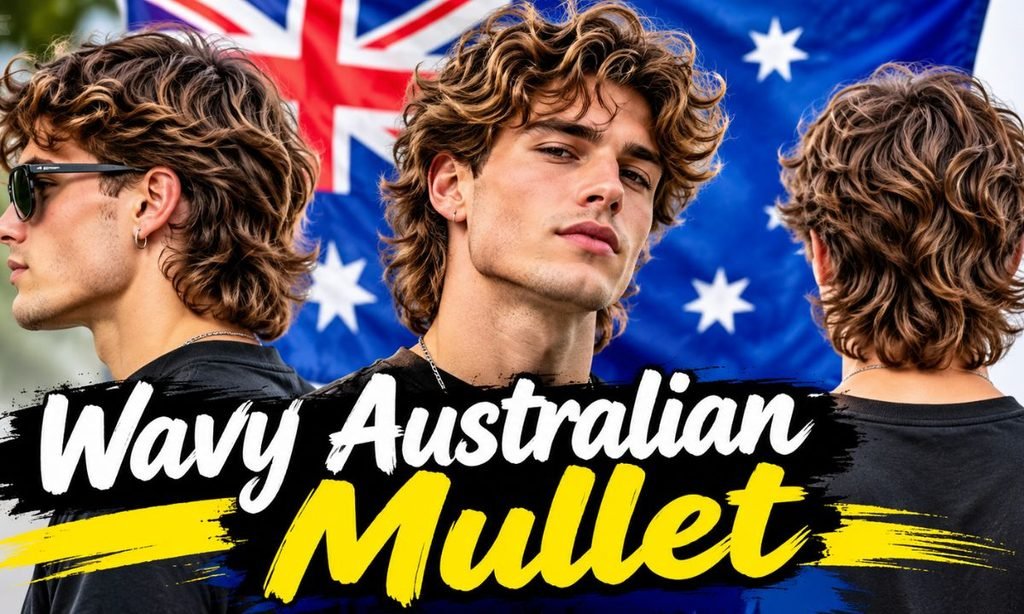
Wavy hair gives the mullet an effortless, beachy movement, which is why wavy Australian mullet haircuts feel so relaxed. A medium-length back with light layering lets the waves stack naturally. The sides can be faded or scissor-cut, depending on how neat you want the look. Air-dry with a texture spray for an easy daily finish.
Shaggy Australian Mullet
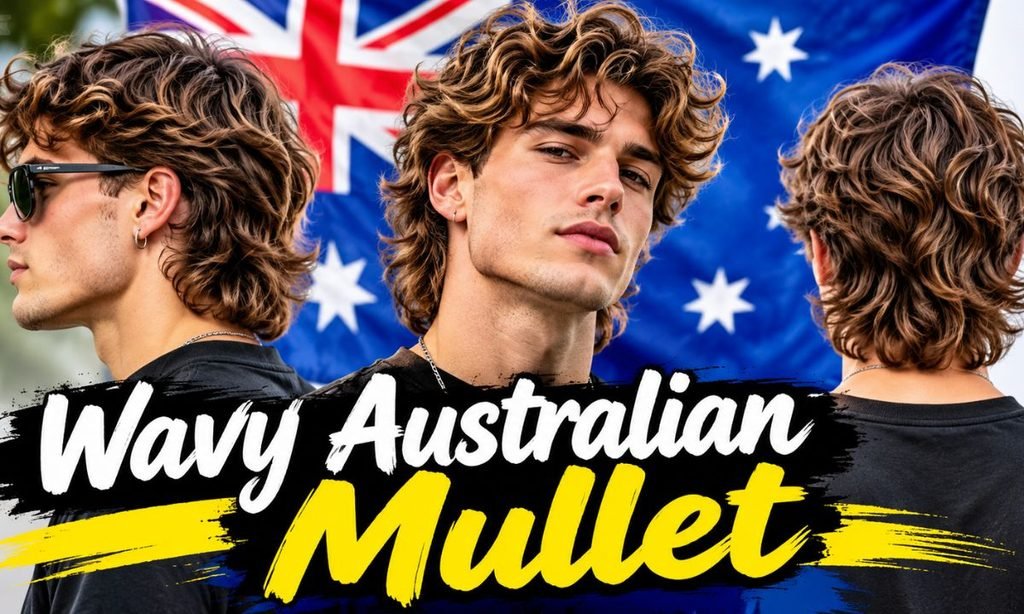
The shaggy mullet leans into volume, with heavy layers throughout and a feathered back. It suits thick hair and a creative, relaxed personality. Ask for long layers around the crown and avoid over-thinning, so the shape keeps its weight and texture. Rough-dry it with a little paste and let the layers fall where they like.
Short Australian Mullet
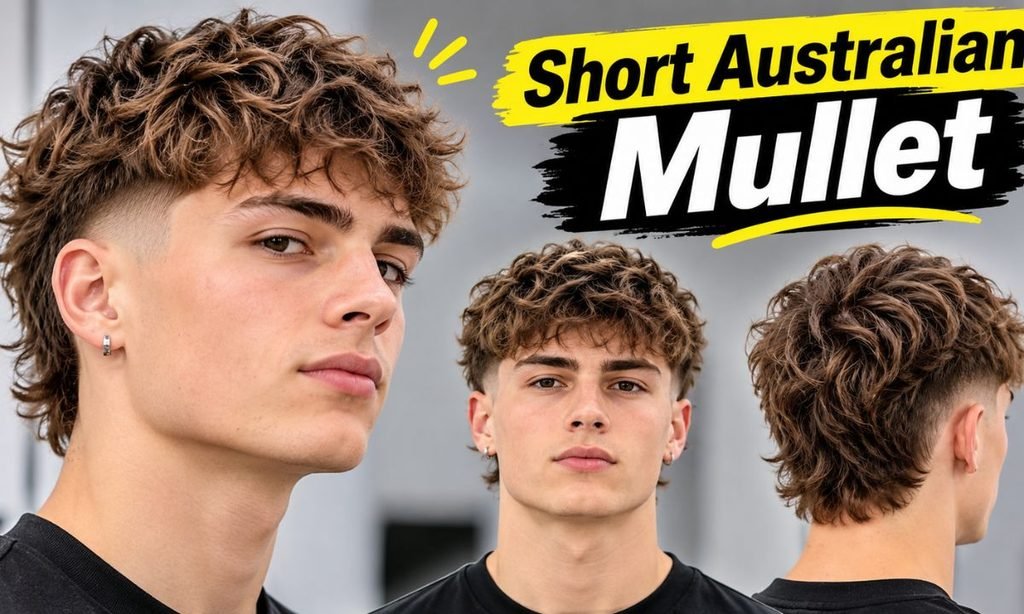
Short Australian mullet haircuts suit anyone who likes the idea of the style but prefers less length. The back only reaches the nape or just over the collar, and the sides are neatly faded. It is simple to style, easy to keep tidy and a good stepping stone before you grow it longer. A light paste adds shape.
Long Australian Mullet
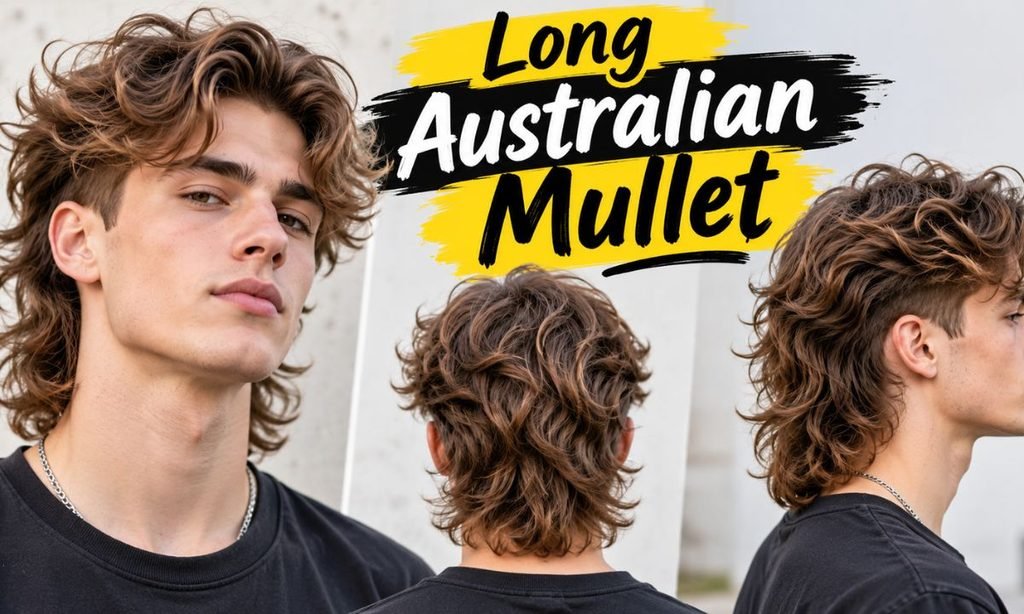
The long mullet lets the back fall well past the collar, sometimes to the shoulders, while the top and sides stay shorter and layered. Long Australian mullet haircuts make a statement and work best on straight or wavy hair that falls smoothly. Condition regularly and trim split ends every two months, because damage is far more visible on longer lengths.
Aussie Mullet with Beard

An Aussie mullet with a beard creates a strong, balanced look. A short, groomed beard sharpens the jawline, while a fuller beard echoes the length at the back. Blend the sideburns into the fade so the whole style looks connected, and keep the cheek line tidy. Ask your barber to shape both beard and haircut in the same visit.
Razor Cut Australian Mullet

A razor cut uses a blade rather than scissors to create soft, feathered ends. On a mullet, it gives the back a wispy finish and reduces bulk without losing length. It works best on medium to thick hair, and it is less suitable for very dry or frizzy strands. Use a moisturising conditioner to keep the ends smooth.
Modern Sporting Australian Mullet
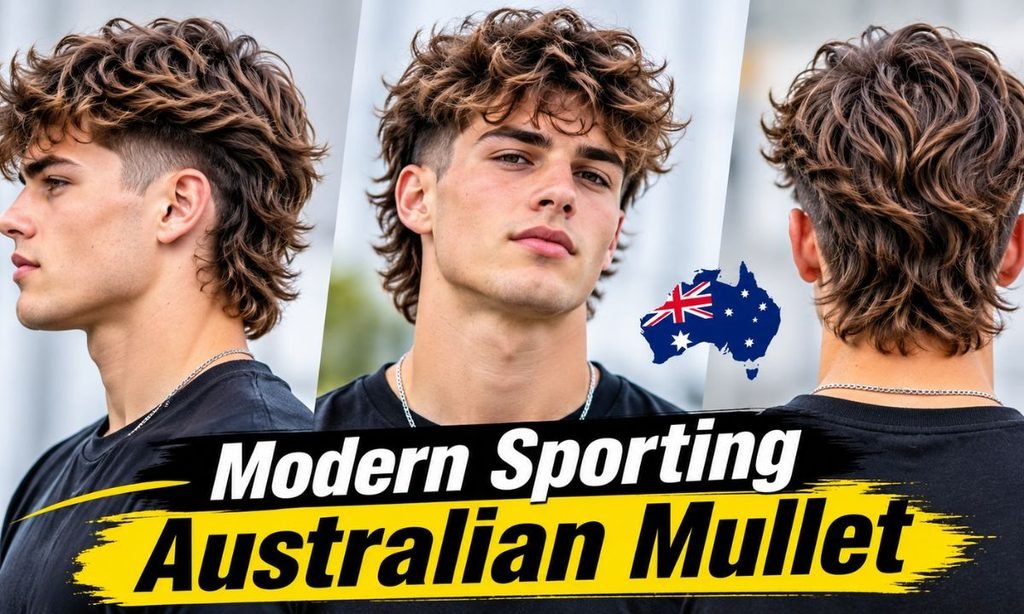
This version suits an active lifestyle. The sides are tightly faded, the top is short and easy to manage, and the back is trimmed to a neat, controlled length. It stays in place during training, looks sharp afterwards and needs very little product. Ask for a clean neckline so it still looks tidy after a workout.
Undercut Australian Mullet
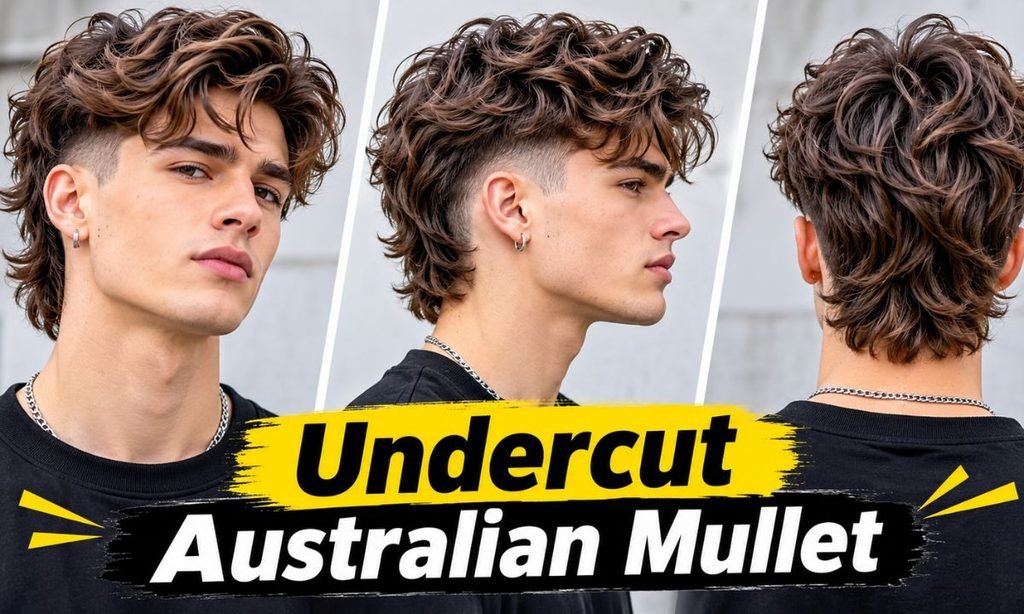
An undercut removes the hair beneath the top layer, creating a dramatic contrast with the longer upper section and the back. Combined with a mullet, the result is bold and angular. Style the top forward or sweep it back, and keep the shaved area clean with visits every three to four weeks. Undercut Australian mullet haircuts suit thick hair best.
Messy Australian Mullet

The messy mullet is built on uneven layers and intentional disorder. It looks spontaneous, but the cut still needs a clear structure so the back and sides keep their shape. A light paste or sea salt spray, scrunched through dry hair, gives the right amount of grit. These Australian mullet haircuts are ideal if you dislike fussy styling.
Fringe Australian Mullet
Adding a fringe turns the mullet into a softer, face-framing style. A forward, textured fringe suits round and square faces, while a side-swept one flatters oval and heart shapes. The front looks polished, and the back keeps the party going. Ask for a fringe that skims the eyebrows and blends into the sides.
Wolf Cut Australian Mullet
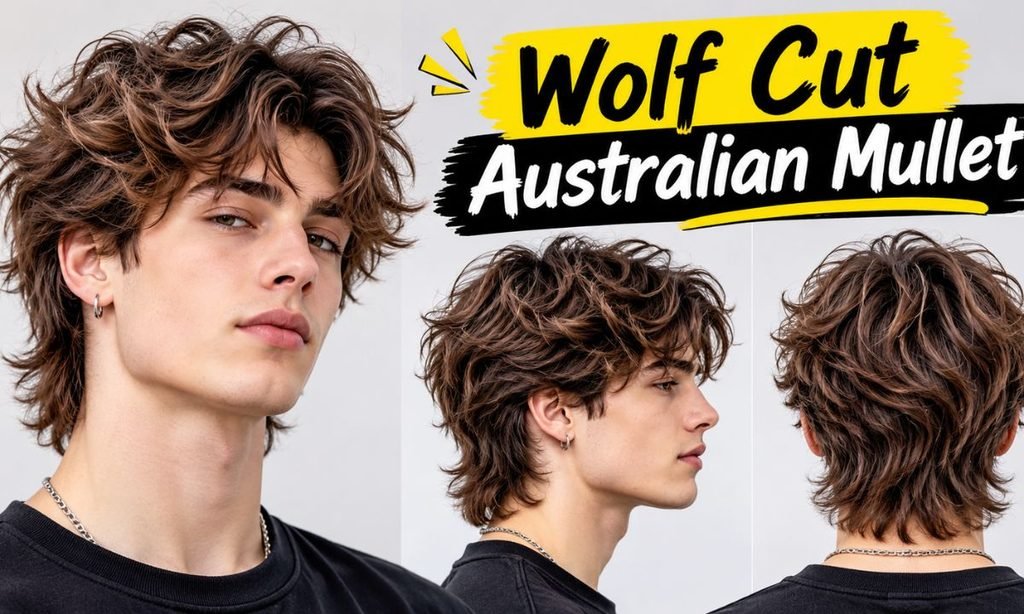
The wolf cut blends the mullet with a shag, using heavy layers on top and wispy lengths at the back. Compared with other Australian mullet haircuts, it is fuller, rounder and more dramatic. It works well on wavy or thick hair and has become a popular Gen Z choice. Ask for plenty of layers, and expect a rough, rock-inspired finish.
Retro Australian Mullet

A retro mullet draws on the 1980s, with feathered sides, a blow-dried top and a long, flowing back. The look is playful and unapologetic, and it suits anyone who enjoys vintage fashion or rock-inspired style. Use a round brush and a dryer to recreate the lift and volume, and finish with a flexible-hold spray.
Styling Tips for an Australian Mullet Haircuts
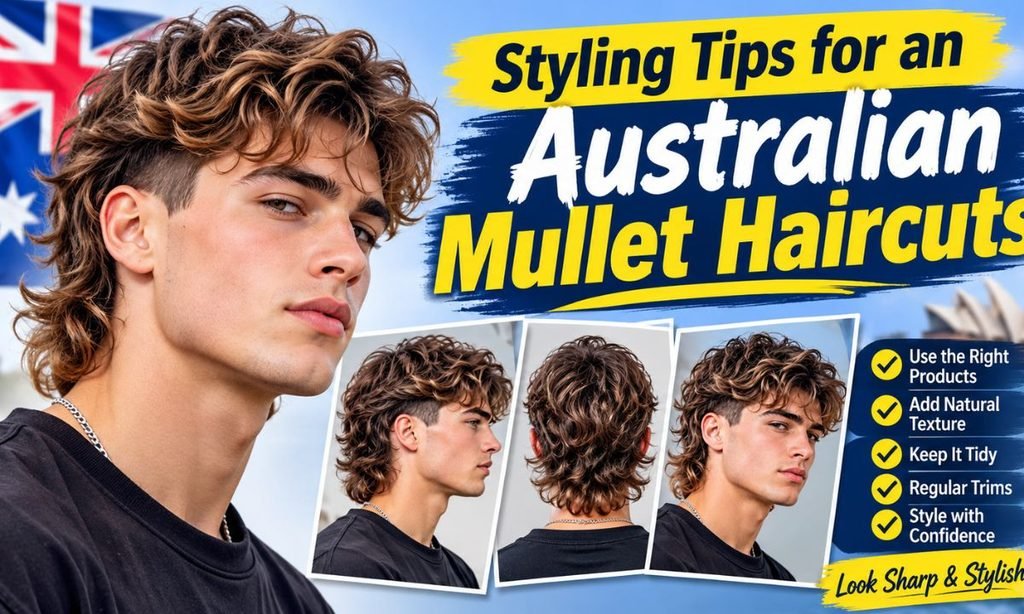
Good styling turns a solid haircut into a standout one. With the right products and a simple routine, Australian mullet haircuts stay neat without taking over your morning. The goal is texture and shape rather than heavy hold, so choose lighter products and build up slowly.
Recommended Styling Products
These products cover most mullet styles:
- Sea salt spray: adds grit and beachy texture to straight or fine hair.
- Matte clay or paste: gives strong, natural hold to the top and fringe.
- Curl cream: defines waves and curls and reduces frizz in the back.
- Lightweight hair oil: smooths the ends of a longer back and adds subtle shine.
- Flexible hairspray: keeps retro or blow-dried shapes in place without stiffness.
- Heat protectant: shields the hair when you use a dryer or straightener.
Daily Styling Advice
Start with towel-dried hair and apply a coin-sized amount of product, working from the roots to the ends. Blow-dry the top on a medium setting, lifting it with your fingers for volume. Let the back dry naturally, or scrunch it for extra movement.
If your cut includes a fade, check the neckline each morning and tidy any stray hairs. Wash two or three times a week, because over-washing strips the natural oils that keep longer hair soft. At night, a loose silk or satin pillowcase helps reduce frizz.
Australian mullet haircuts men

Many men choose Australian mullet haircuts because they combine a neat fade with a confident, expressive back. For a work-friendly option, keep the sides tight and the back just past the collar. For a bolder look, add layers, a fringe or extra length. A beard or moustache can balance the style and strengthen the jawline.
Australian mullet haircuts male
When a male client asks for Australian mullet haircuts, a good barber looks at the jawline, forehead and hair density first. A strong jaw can carry a sharper, high-contrast cut, while softer features suit gentle layers and a lower fade. Share your daily routine and styling habits so the final shape fits your lifestyle.
Australian mullet and moustache

A moustache adds character to a mullet, especially a trimmed, thin one or a full handlebar for a retro feel. Keep it tidy and in proportion with your hair length so the face does not feel overloaded. The pairing looks particularly good with feathered, 1980s-inspired cuts and with a clean, shorter beard.
Australian mullet fade
The fade is what makes the style modern. Choose a taper for subtle blending, a low fade for softness, a burst fade for a curved edge, or a skin fade for a crisp finish. Book a refresh every three to four weeks so the transition stays smooth and the neckline stays sharp.
Australian mullet Modern
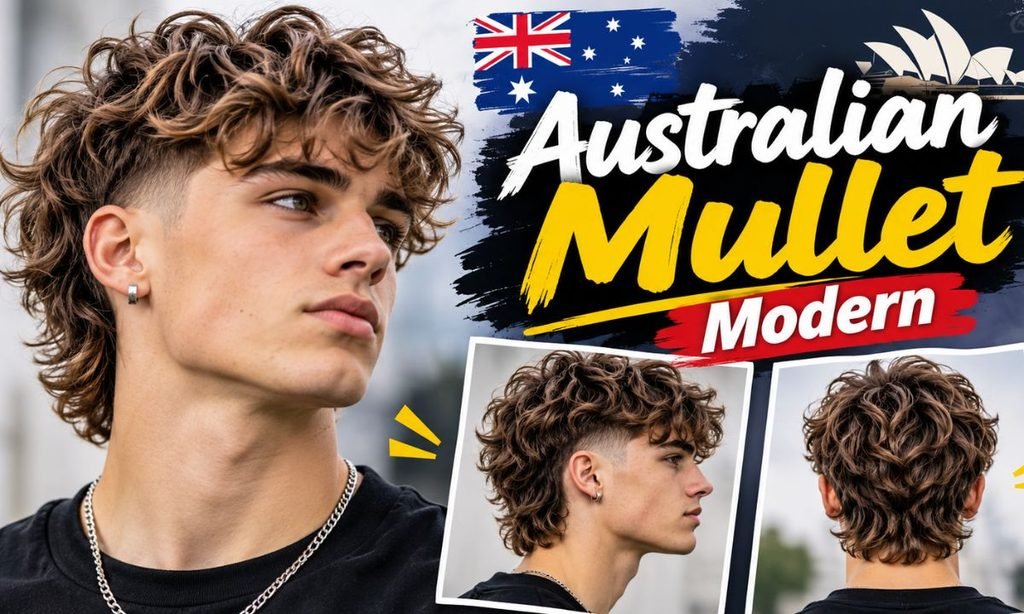
A modern take pairs clean fades with soft layers and natural texture. Think shorter sides, a lighter top and a back that moves without looking overgrown. Many Australian mullet haircuts now follow this blueprint because it works in most workplaces and suits most hair types, from fine straight strands to thick waves.
Modern mullet
The modern mullet is less about shock value and more about shape. Barbers now blend each section carefully, so the length flows from the crown to the nape. It appeals to people who want a distinctive cut that still looks refined, with options ranging from subtle and professional to loud and creative.
Australian mullet short hair
If your hair is short, you can still start a mullet. Ask for slightly longer length at the nape and keep the sides faded. In three to four months, the back will begin to form a clear mullet shape. Texture spray and matte paste help short hair look fuller while it grows.
Australian mullet kids
Parents often want a cut that looks cool and stays easy to manage. For children, keep the length moderate, use soft layers and avoid heavy products. A short back with a light taper is practical for school and sport. Check school grooming rules before booking, and choose a barber who is comfortable working with children.
Australian Mullet Haircuts Maintenance Guide
A mullet is easy to live with, but the sides and neckline lose definition quickly. Regular trims keep the shape clean, while good hair care keeps the longer back healthy. Use a gentle shampoo, condition the lengths and limit heavy heat styling so the ends do not dry out. With a little attention, Australian mullet haircuts stay sharp from one appointment to the next.
Maintenance Schedule
| Task | How often |
| Fade and neckline refresh | Every 3 to 4 weeks |
| Full shape trim | Every 6 to 8 weeks |
| Deep conditioning mask | Once a week |
| Split-end trim for the back | Every 8 to 10 weeks |
| Beard or moustache tidy-up | Every 1 to 2 weeks |
Who Should Try an Australian Mullet?
Almost anyone who enjoys a bit of personality in their haircut can try a mullet. It suits people with straight, wavy or curly hair, and it works across different ages when the length is adjusted sensibly. If you work in a conservative office, choose a taper fade and a shorter back. If you have a creative job, you can go further with a wolf cut or a shaggy finish.
It is also a good fit for anyone growing out a short cut, since the longer back hides the awkward stages. Before committing, share photos with your barber and talk through the length you want. A clear brief helps your barber shape Australian mullet haircuts that suit your features and your routine.
FAQ’s
Is an Australian mullet suitable for professional settings?
Yes, with the right version. Australian mullet haircuts with a taper fade, a shorter back and a neat, matte finish look polished in most offices. Keep the sides tidy and the neckline clean, and save shaggy or wolf cut variations for more relaxed workplaces.
Which fade works best with an Australian mullet?
A taper fade is the safest and most versatile choice, while a low fade suits softer styles. A burst fade works especially well with curly hair, and a high or skin fade delivers the strongest contrast for Australian mullet haircuts with a bold finish.
Does a mullet work with curly hair?
Yes. Curly hair gives the back natural volume and shape. Keep the sides shorter, let the curls grow longer at the nape, and use a curl cream to control frizz. A burst fade is a popular match for this combination.
How often should I trim my Australian mullet?
Refresh the fade and neckline every three to four weeks. A fuller trim to maintain the overall shape is usually needed every six to eight weeks, depending on how quickly your hair grows. Regular visits keep Australian mullet haircuts looking intentional rather than overgrown.
Is the mullet hairstyle Australian?
Not exclusively. The mullet became popular in many countries during the 1970s and 1980s, so no single place owns it. The term Australian mullet usually refers to a modern, fade-based version that has become closely associated with Australian style.
What is the gen Z mullet?
The Gen Z mullet is a modern take on the classic cut, with soft layers, a blended fade and a textured, often wolf-inspired shape. It is more fluid and expressive than the original, and it is frequently paired with colour or a fringe.
Which mullet cut is best?
There is no single best cut, because the answer depends on your face shape, hair type and lifestyle. A taper fade mullet suits most people, a wavy or shaggy mullet suits textured hair, and a short mullet is ideal for beginners.
How to style a mullet cut?
Apply a small amount of sea salt spray or matte paste to damp hair, blow-dry the top with your fingers for lift, and scrunch the back for texture. Finish with a light-hold spray if you want the shape to last all day.
Conclusion
The mullet has moved far beyond its old reputation. Today, Australian mullet haircuts offer a flexible mix of clean fades, soft layers and personality, with options for every face shape, hair type and workplace. From a subtle taper to a bold wolf cut, there is a style that suits you. Whether you are trying the look for the first time or refining an existing cut, small details such as fade height, layer length and product choice make the biggest difference.
Choose the version that matches your lifestyle, bring reference photos to your barber and commit to a simple care routine. With the right shape and regular trims, Australian mullet haircuts can look confident, modern and effortless for years to come.

Meet Olivia Bennett, a passionate hair and beauty writer at ClearN Haven, sharing trendy haircuts, stunning hairstyles, and expert tips for beautiful hair.
1 thought on “20 Modern Australian Mullet Haircuts You’ll Love”