

The Billy Ray Cyrus mullet is one of the most recognizable hairstyles in country music history. When “Achy Breaky Heart” climbed the charts in 1992, the shorter, tousled front and long, feathered back became almost as famous as the song itself, turning a regional look into a worldwide talking point.
Decades later, the cut is back in barbershops, fashion shoots, and social media feeds. This guide covers the history behind the look, the main style variations, how it differs from modern mullets, and exactly what to tell your barber so you walk out with the right shape.
Billy Ray Cyrus Inspired Mullet Styles
Not every mullet looks the same. Styles inspired by Billy Ray Cyrus range from the faithful 1990s original to softer interpretations that fit everyday life. Here are the main variations people request, along with the hair types and routines that suit each one.
Classic 90s Billy Ray Cyrus Mullet
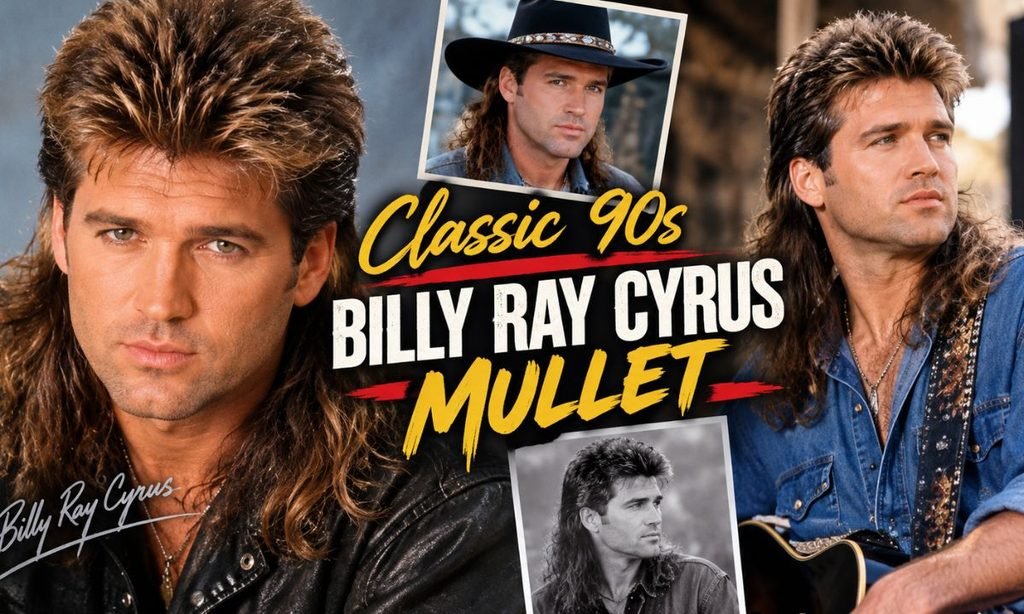
The classic 90s Billy Ray Cyrus mullet is built on volume, feathered layers, and length at the back. The top and sides are cut into soft layers that frame the face, while the back falls well past the collar. It is usually blow-dried with lift at the crown and set with a light hairspray. This version pairs naturally with stonewashed denim, western shirts, and retro-themed events, and it remains a reliable template for anyone who wants a faithful throwback.
Feathered Mullet
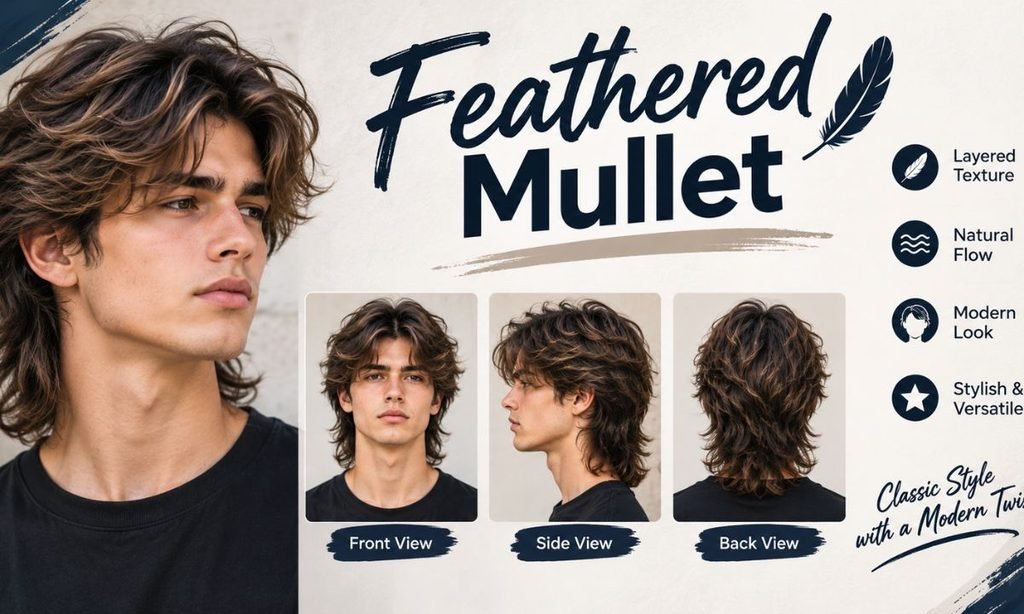
Feathering gave 90s hair its signature flow. The stylist cuts thin, wispy layers that sweep away from the face, then blends them into the longer back section for a smooth transition rather than a harsh step. This approach works best on straight to slightly wavy hair of medium thickness. A round brush, a blow dryer, and a flexible-hold product help you recreate the lift at home without making the hair look stiff.
Read More: Modern Billy Ray Inspired Mullet
Long Country Mullet

The long country mullet pushes the length further, with the back reaching the shoulder blades while the front stays manageable around the forehead and ears. Because of the extra length, healthy ends matter, so regular trims are essential. Pair it with a cowboy hat or a denim jacket and it feels naturally tied to country music culture. It is a strong option for people with thick hair who want presence without heavy styling.
Layered Mullet

A layered mullet uses extra graduation through the crown and sides to remove bulk and add shape. The layers can be short, medium, or long depending on how dramatic you want the finish. It suits dense hair because the layers release weight and let the strands move. It also grows out gracefully, which makes upkeep between salon visits much easier.
Shaggy Mullet
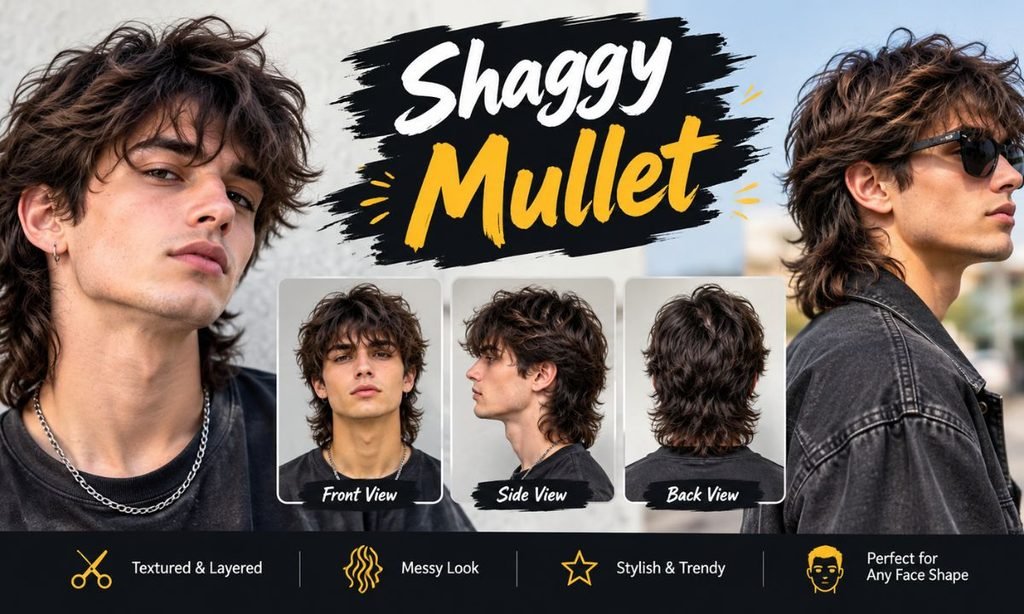
The shaggy mullet leans into messy texture. Instead of precise feathering, the stylist uses choppy point-cutting to create uneven, lived-in layers. Texturizing spray or sea salt spray adds grip, while air drying keeps the finish relaxed. It is popular with younger wearers who love the nostalgia but prefer a looser, more rebellious attitude than the polished 90s original.
Wavy Mullet
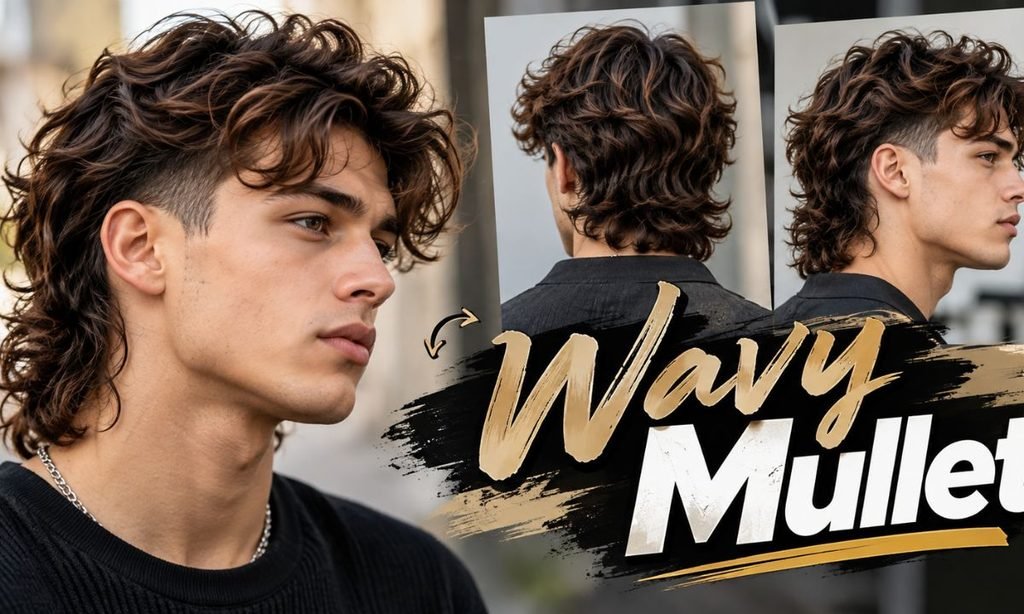
Natural waves add softness and movement to the cut. A wavy mullet works best when the stylist cuts with the wave pattern in mind, leaving enough length for bends and curls to sit naturally. Apply a curl cream or light mousse to damp hair, scrunch gently, and dry with a diffuser for a fuller, more dimensional result. Wavy hair is often more forgiving here because the texture hides small imperfections in the layering.
Modern Billy Ray Inspired Mullet
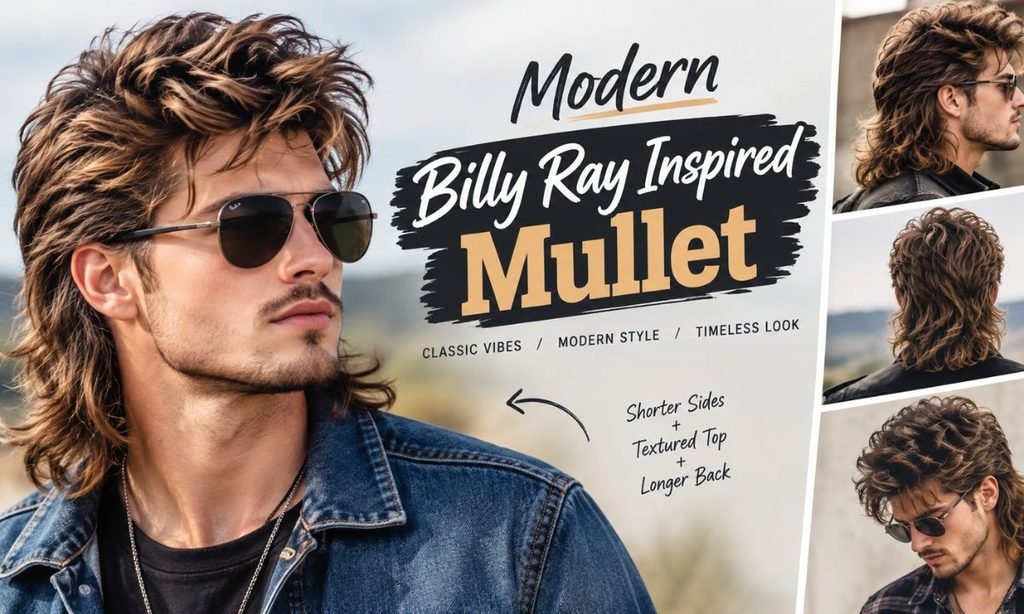
A modern Billy Ray inspired mullet keeps the spirit of the original but tones down the extremes. The back is shorter, the layers are cleaner, and the sides are often tapered for a sharper outline. This version suits office settings and casual weekends, giving you the nostalgia without a full 90s costume. Many barbers now blend the transition carefully so the haircut reads as a deliberate style choice rather than a joke.
The Impact of Billy Ray Cyrus on Mullet Culture

Mullets existed long before the 1990s. Rock musicians of the 1970s and 80s wore versions of the cut, and it was common in sports and rural communities. What Billy Ray Cyrus did was carry the style to a vast mainstream audience. His debut album, Some Gave All, arrived in 1992 alongside the hit “Achy Breaky Heart,” and he became a household name almost overnight.
The Billy Ray Cyrus mullet became visual shorthand for early 90s country crossover success. Music videos, magazine covers, and television appearances kept the look in front of millions of people, and fans began asking barbers for similar cuts. The line dancing craze tied to the song became part of the same pop culture moment, which helped fix the hairstyle in public memory.
The influence has lasted. Whenever 90s nostalgia returns, the Billy Ray Cyrus mullet is among the first references people mention, showing how one performer’s styling can become a cultural landmark. Today the mullet is also read as a symbol of authenticity, irony, and unapologetic confidence, and fashion editors and social media creators continue to reclaim it.
Part of the appeal is how clearly the style communicates personality. A Billy Ray Cyrus mullet says the wearer values fun over formality, and that message travels easily across photos, videos, and live performances. Stylists often point out that this readability is exactly why the cut keeps returning in haircut trends: it gives people an instant, memorable silhouette.
Key Features of the Billy Ray Cyrus Mullet

Several details set the Billy Ray Cyrus mullet apart from other versions of the cut:
- Volume at the crown: lift at the top gives the style its big, 90s outline.
- Feathered layers: soft, wispy layers frame the face and move naturally.
- Long back: the length falls past the collar and often reaches the shoulders.
- Tapered ends: the back is thinned so it never looks blunt or heavy.
- Natural movement: hair is brushed back or tousled rather than slicked flat.
- Western styling: cowboy hats, denim, and boots complete the look.
Together these elements created a cut that was easy to recognize and hard to forget.
How the Billy Ray Cyrus Mullet Differs from Modern Mullets

The Billy Ray Cyrus mullet and today’s mullets share the same basic idea of shorter hair at the front and longer hair behind, but the execution has changed a great deal. Knowing the differences helps you choose the version that fits your hair texture, your lifestyle, and your comfort level.
Traditional Billy Ray Cyrus Mullet

The traditional cut is soft, voluminous, and dramatic. It relies on blow-drying, feathered layers, and generous length, creating a flowing silhouette that reads as pure 90s country. It is less about precision and more about attitude, with a relaxed, lived-in finish that moves when the wearer does.
Modern Mullet Variations

Modern versions favor sharper structure. Barbers use clippers for tapered sides, a mullet fade, or a burst fade around the ears, and they add texture on top with scissors. The back is usually shorter and the transition cleaner. Styling is lighter too, often using clay, paste, or sea salt spray instead of heavy hairspray.
| Feature | Traditional | Modern |
| Back length | Past the collar, often to the shoulders | Short to medium, often at the nape |
| Layering | Feathered and soft | Choppy and textured |
| Sides | Brushed back and natural | Tapered, faded, or clipper-cut |
| Styling | Blow-dry and hairspray | Clay, paste, or salt spray |
| Overall vibe | Retro and theatrical | Edgy and fashion-led |
Can You Still Wear a Billy Ray Cyrus Mullet Today?
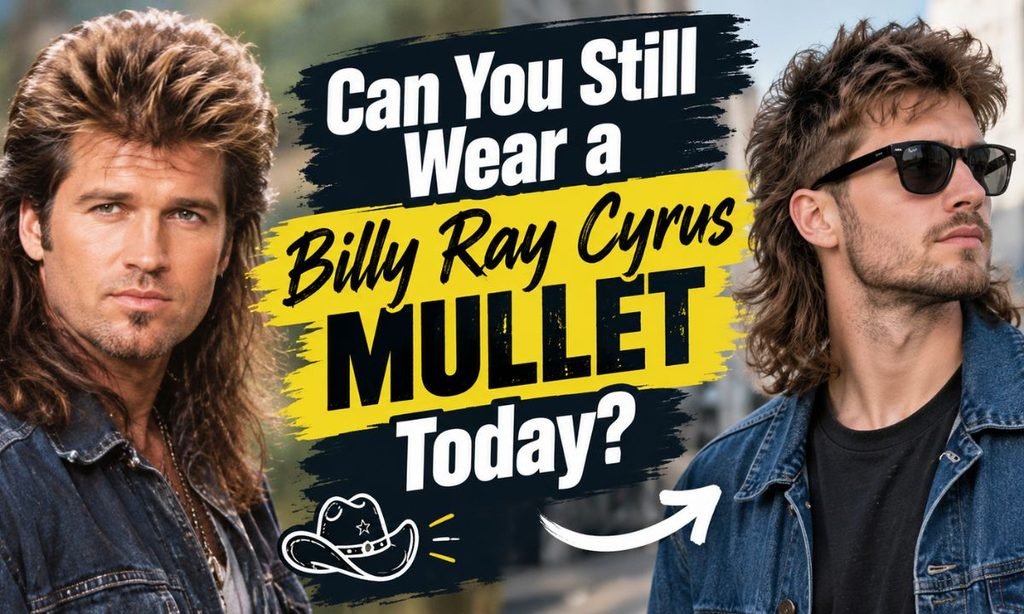
Yes, you can still wear a Billy Ray Cyrus mullet today, as long as you adapt it to your hair type and daily life. Hair that is thick, wavy, or naturally textured holds the shape well, while very fine hair may need extra layering and volumizing products to avoid looking flat.
Confidence matters as much as technique. A mullet looks best when it is worn on purpose, with clean edges, healthy ends, and clothes that suit the mood. If your workplace is conservative, a shorter back and a softer transition keep the look polished. If you prefer the full throwback, lean into it at concerts, themed parties, and relaxed weekends, where the retro energy feels right at home.
It also helps to think about proportion. The longer the back, the more the cut depends on healthy, well-conditioned hair, so anyone planning to grow it out should schedule regular trims and use a moisturizing conditioner. A softer version, with shoulder-grazing length and gentle layers, is often the easiest starting point before moving toward the fuller 90s volume.
Billy Ray Cyrus Mullet Achy Breaky Heart

“Achy Breaky Heart” is the song most closely linked with the Billy Ray Cyrus mullet. Released in 1992, it became a crossover hit, reached listeners well beyond country radio, and helped launch a line dancing craze. Audiences saw the performer and the hairstyle together, so the look and the music became inseparable in popular memory.
That is why people still search for the two together. The hair, the denim, and the dance floor energy all belong to the same era. If you want to capture that spirit, think of the haircut as part of a complete package: confident posture, western clothing, and an easygoing attitude.
Billy Ray Cyrus Mullet Wig

A Billy Ray Cyrus mullet wig is a popular costume choice for Halloween, 90s parties, and country music events. It gives you the full look without committing to a haircut. A few tips make the difference between a convincing costume and a cheap-looking one:
- Choose a wig with natural color variation and visible layering, since flat, uniform fibers look artificial.
- Check the cap size so the wig sits securely without sliding.
- Pin your own hair flat under a wig cap before putting it on.
- Style synthetic fibers gently and avoid heat unless the label says it is heat-safe.
- Add a cowboy hat and a denim jacket to complete the costume.
If you plan to wear the wig for several hours, choose a lightweight cap construction and test the fit beforehand. A wig that is slightly trimmed and thinned at the ends often looks more natural in photos than one straight out of the package, and a light mist of hairspray helps the layers keep their shape under party lighting.
Mullet Haircut
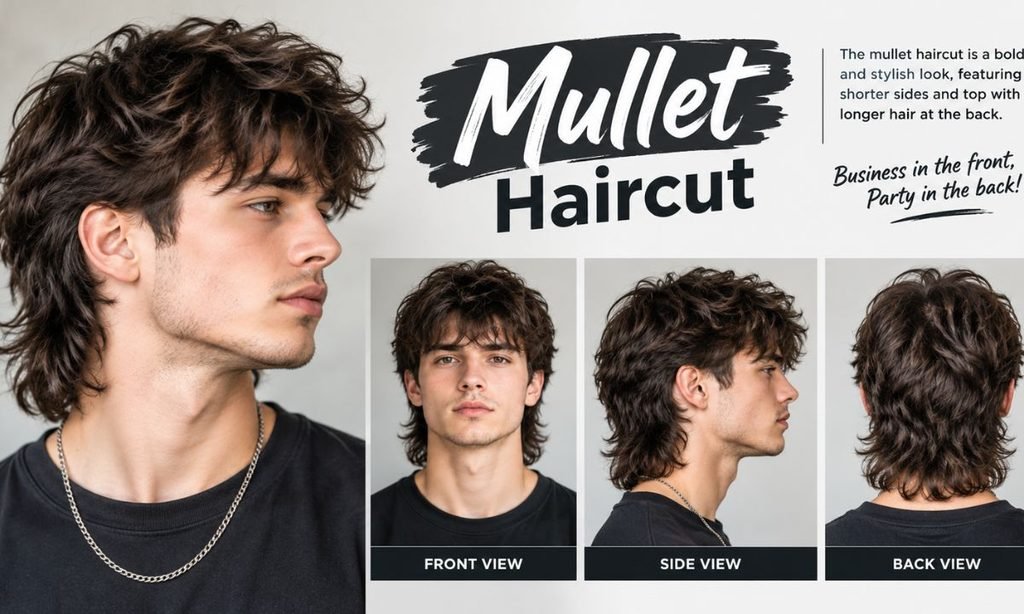
A mullet haircut is traditionally described as short at the front and sides and long at the back, often summed up as “business in the front, party in the back.” The cut has moved through many eras, from rock stages in the 1970s to sports fields in the 1980s, and back to barbershops and fashion shows in the 2020s.
Popular modern takes include the classic mullet, the mullet fade, the mini mullet, and the shag mullet hybrid. Each balances length, texture, and shape differently. The Billy Ray Cyrus mullet sits at the dramatic, voluminous end of that spectrum, which is why it is so often used as the reference point for a bold, nostalgic version.
What makes any mullet work is the transition between the short and long sections. A skilled barber blends the top into the back with scissor-over-comb work, point cutting, or thinning shears, so the haircut looks connected instead of stacked. Hair texture matters here: straight hair shows every line, while wavy or curly hair hides small blending errors and adds natural volume.
Billy Ray Cyrus Mullet Song

When people search for a Billy Ray Cyrus mullet song, they are usually looking for the music tied to the look, and “Achy Breaky Heart” is the track that defines it. Its popularity placed the hairstyle on television screens and magazine covers around the world.
Other work connects to his image too. The 1992 album Some Gave All introduced him widely, and his appearance on the 2019 remix of Lil Nas X’s “Old Town Road” introduced him to a younger audience, keeping his western style in the conversation. Playlists built for 90s nostalgia, line dance lessons, or retro nights often start with these tracks, so they make a natural soundtrack for a mullet-themed event.
Billy Ray Cyrus Now

Today, Billy Ray Cyrus is no longer defined by a single hairstyle. He has continued to record music, perform, and appear on screen, and his look has changed over the years. For many people, the original Billy Ray Cyrus mullet is still the version they picture first, yet his later appearances show that a haircut can evolve with the person wearing it.
If you want current details about his projects or public appearances, check his official channels and recent interviews, since news about public figures changes quickly.
What stays constant is the cultural footprint. Searches for his name still bring up the 90s era first, and the mullet remains the image that fans, stylists, and costume designers return to. That staying power is a reminder that one distinctive hairstyle can define a decade and keep inspiring new interpretations long after the original trend has passed.
Miley Cyrus

Miley Cyrus is Billy Ray’s daughter, and the two worked together on Hannah Montana, where he played her on-screen father. She later became a global pop and rock performer in her own right. Around 2019 and 2020, she wore a shaggy, rock-inspired mullet that helped push the cut back into fashion conversations.
For many viewers, this created a neat generational link: a father who made the cut famous in the 90s and a daughter who reinvented it for a new decade. Her version was shorter and edgier, with choppy layers and a lived-in texture, while the Billy Ray Cyrus mullet was softer and more feathered. Both show how adaptable the style can be.
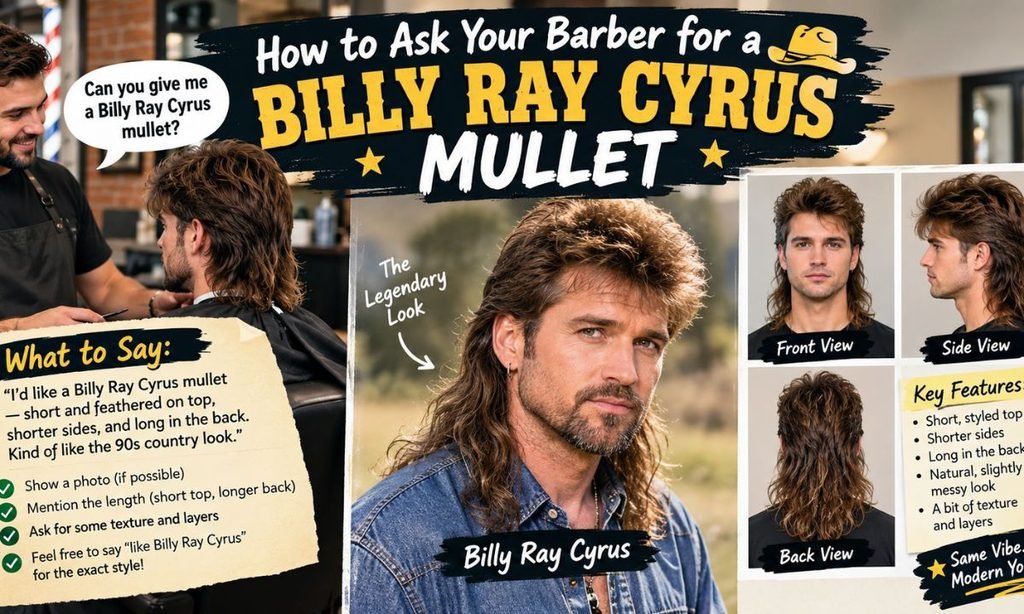
How to Ask Your Barber for a Billy Ray Cyrus Mullet

Clear communication makes the difference between a flattering mullet and a disappointing one. Follow these steps when you sit in the chair:
- Bring two or three reference photos from different angles, including one of the classic Billy Ray Cyrus mullet and one modern version if you prefer softer edges.
- Say how long you want the back, using landmarks such as the collar, the shoulder, or the shoulder blade.
- Ask for feathered layers on top and around the ears, and clarify whether you want the sides tapered or natural.
- Discuss the neckline: rounded, squared, or natural.
- Ask how often you should trim to keep the shape clean.
Mention your hair texture and daily routine so the barber can adjust the cut. An honest conversation up front avoids surprises later.
If this is your first mullet, start a little shorter than you think you want. It is easy to let the back grow, but impossible to add length once it is cut. Many barbers also recommend a follow-up visit after a few weeks to refine the layers once the hair settles into its natural shape, which is especially useful when you are trying a Billy Ray Cyrus mullet for the first time.
Styling Tips for a Billy Ray Cyrus Mullet
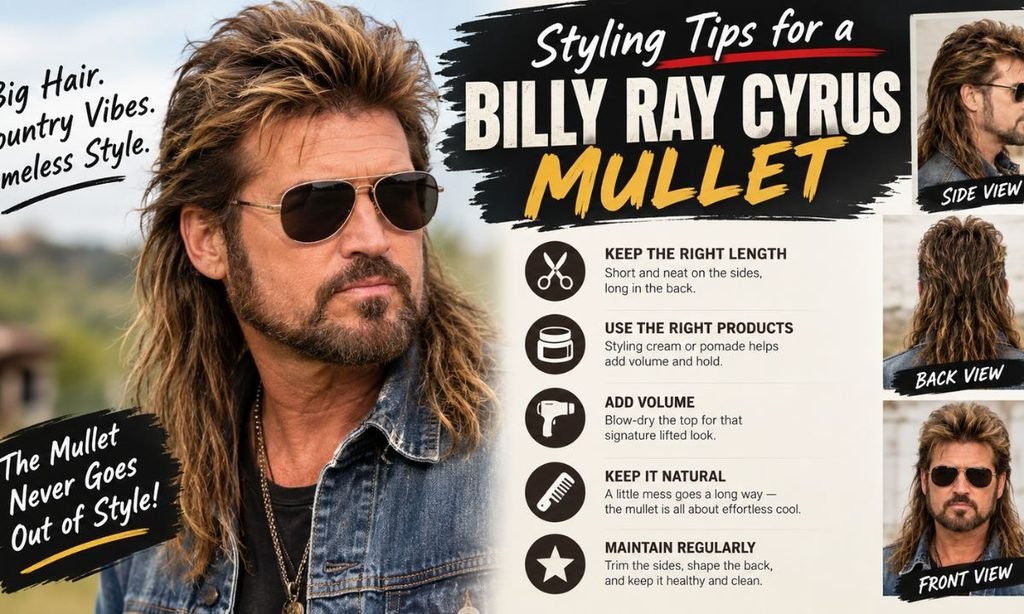
Keeping a Billy Ray Cyrus mullet looking sharp takes only a little routine:
- Wash with a gentle shampoo and condition the lengths to keep the back soft.
- Apply a heat protectant before blow-drying.
- Blow-dry the top upward with a round brush for volume.
- Use a light mousse or texturizing spray for hold without stiffness.
- Finish with a flexible hairspray for that 90s lift.
- Trim the ends every six to eight weeks to keep the outline clean.
FAQs
Why is Billy Ray Cyrus famous for his mullet?
His rise to fame in 1992 with “Achy Breaky Heart” put the hairstyle in front of a huge audience. The Billy Ray Cyrus mullet became part of his public image, and it remains a go-to 90s reference in pop culture.
What type of mullet did Billy Ray Cyrus have?
He wore a feathered, voluminous country mullet, with layered, tousled hair on top and a long back section that fell well past the collar.
Is the Billy Ray Cyrus mullet still popular today?
Yes. Mullets have returned through fashion and social media, and the Billy Ray Cyrus mullet is often referenced as the nostalgic inspiration, although most people now wear a shorter, cleaner modern version.
How do I ask my barber for a Billy Ray Cyrus mullet?
Show reference photos, specify the back length, request feathered layers, and discuss the sides and neckline. Ask about maintenance so you know how often to trim.
What face shapes suit a Billy Ray Cyrus mullet?
Oval faces handle most versions of the cut. Square faces benefit from soft feathering that smooths strong angles, round faces look balanced with extra height at the crown, and heart-shaped faces suit fuller layers around the jaw. A good barber can adjust the layers to your features.
Conclusion
The Billy Ray Cyrus mullet turned a simple haircut into a lasting piece of 90s pop culture, helped by a hit song, a line dancing craze, and constant television exposure. Its feathered layers, crown volume, and long back remain instantly recognizable.
Whether you want the full classic, a shaggy version, or a refined modern take, the style can work if you match it to your hair texture and lifestyle. Bring clear references, talk through the details with your barber, and style it with confidence.
Above all, the haircut is a reminder that style does not have to be serious to be memorable. Wear it with humor, keep the ends healthy, and the 90s legacy will do the rest.

Meet Olivia Bennett, a passionate hair and beauty writer at ClearN Haven, sharing trendy haircuts, stunning hairstyles, and expert tips for beautiful hair.